
Funerary Practices
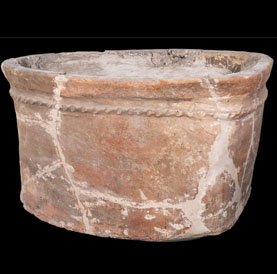
Ossuary
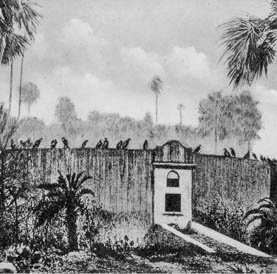
Dakhma:
Tower of Silence
Ossuary
Ossuary: Mesopotamian Receptacle for the Dead.
An undated terracotta bathtub receptacle with one rounded end and one squared-off end with straight sides is of Mesopotamian origin. It has a raised decorative chain pattern below the lip of its thick flat rim.
Many examples of these receptacles have been found at sites in southern Mesopotamia (Babylonia) such as Ur, Nippur and Warka. The skeletons found in these bathtub receptacles are wrapped in shrouds and accompanied by jewellery and trinkets.
The rectangular or oval ossuaries or astodans (Av. uzdāna) seen on the top right, are receptacles in which the bones of the dead are preserved after the body is exposed to nature and consumed by birds and wild animals. This practice is in accord with Zoroastrian teachings which promises that the bones of the dead will rise at the end of time, when Resurrection will take place. Several examples of such beautifully decorated clay ossuaries have been excavated in Central Asia.
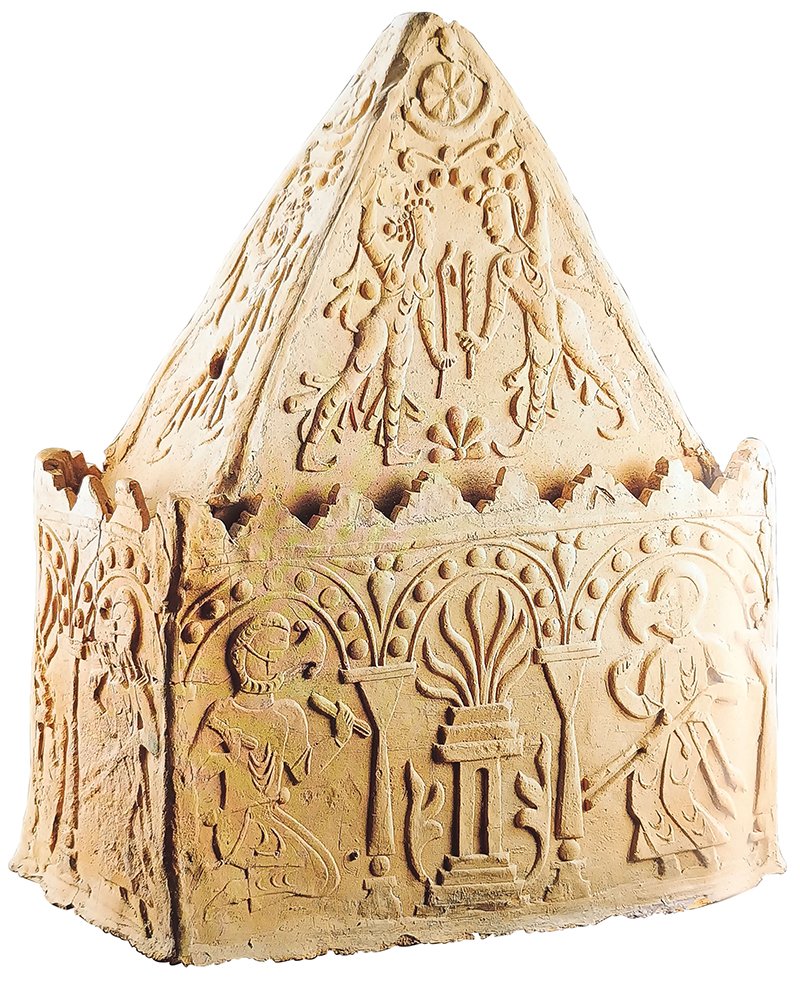
Mullakurgan Ossuary, c. 7th century, made of baked clay found by farmers in the Province of Mullakurgan (near Samarkand). Displayed in Afrasiab Museum, Samarkand.
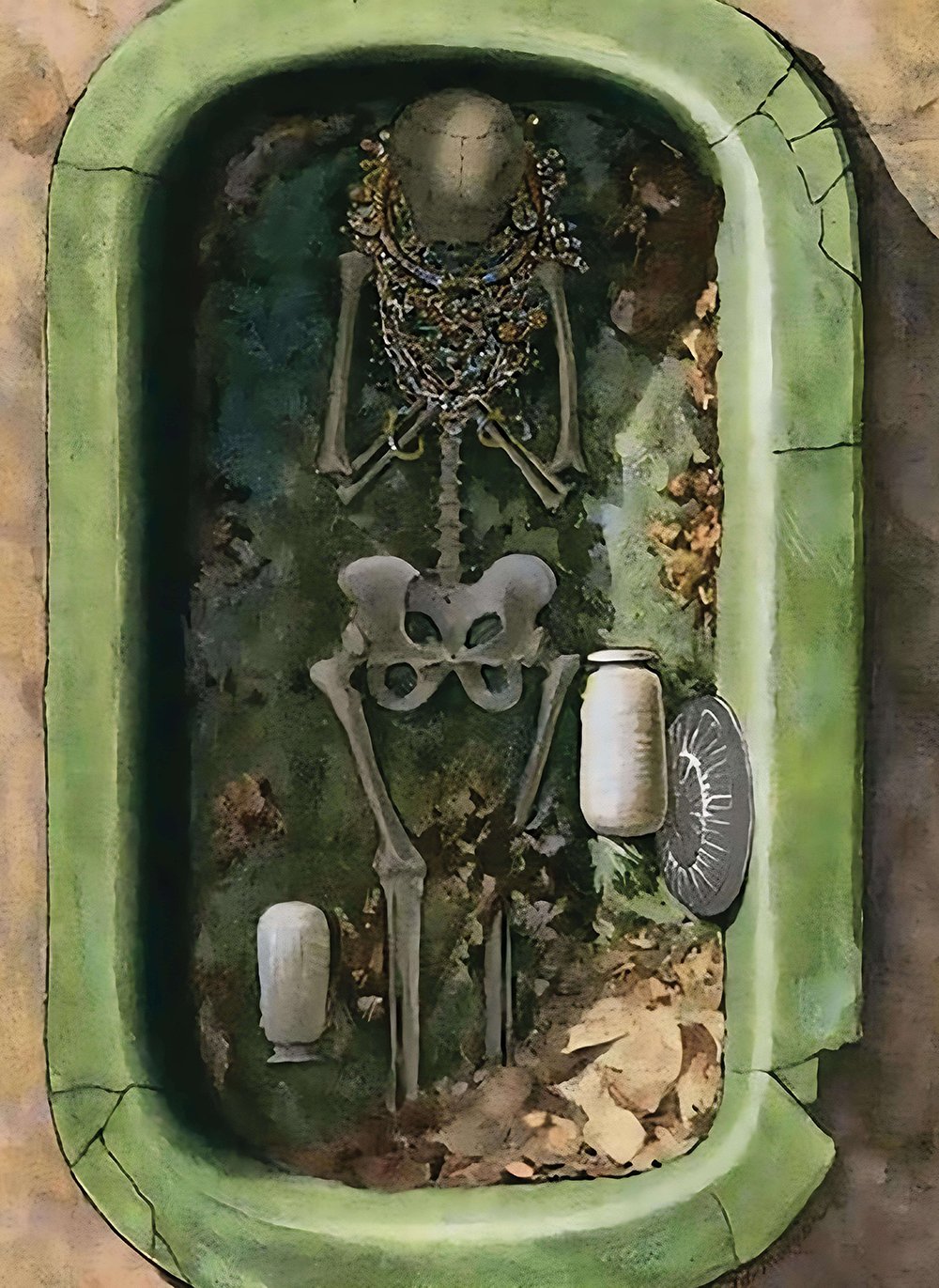
A bronze coffin similar in shape to the terracotta bathtub receptacle, exhibited below, depicts a pre-Zoroastrian funerary rite. It was found while excavating a high mound-hill at Susa in the late 19th Century. ~ Watercolour by Jacques de Morgan, Ancient City of Susa 6000 Year of
History.
Dakhma:
Tower of Silence
Dakhma: Tower of Silence
In the mid-19th century, Robert Xavier Murphy, the Oriental scholar and editor of Bombay Times, first used the expression ‘Towers of Silence’ to describe the place where the Parsi Irani Zoroastrians exposed their dead.
The Tower of Silence, also known as the dakhma, is a tall circular tower open to the sky. It is designed like an amphitheatre, with concentric tiers on which the corpse of a Zoroastrian is placed to expose it to the elements and birds of prey; a unique and environmentally sustainable practice. Zoroastrians are religiously mandated not to bury or burn their dead, as it pollutes the earth and the creation of fire. Burial at sea is prohibited, as it pollutes the creation of water. The six creations of sky, water, earth, plants, animals, and fire are considered sacred, to be nurtured and worshipped by the Zoroastrians.
Dakhmas are found all over the province of Gujarat in India, where the Parsis have settled. The earliest extant dakhma c. 13th century is in Bharuch (Gujarat). In Mumbai the dakhmas are located on a hill called Doongerwadi, surrounded by a natural forest. Today, there are four functioning dakhmas used by the Parsi Irani community when death takes place.
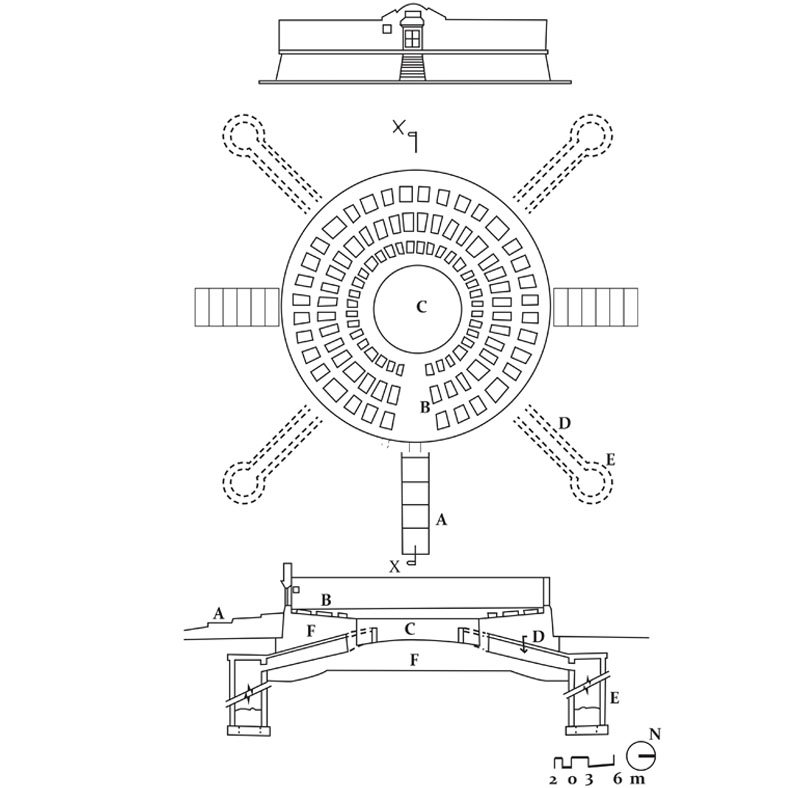
Drawing depicting a section of the Tower of Silence at Doongerwadi, Malabar Hill showing the front elevation on top, and filter system of the tower at the bottom. The body of the deceased Zoroastrian is placed on one of the stone slabs laid out to form three concentric circles, as can also be seen in the clay model in below exhibit.
A – sloping ramp, B – platform, C – central well or Bhandar, D – underground drains, E -purifying filters, F – cinder filings.
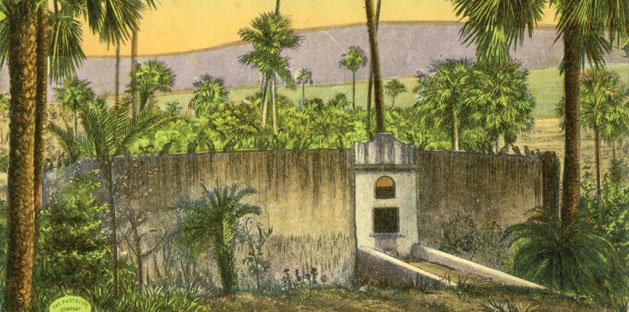
Parsi Tower of Silence, Bombay.

Model of Dakhma (Tower of Silence) showing the three tiers on which the bodies are placed and the central well in which the bones of the dead body are kept. The aperture allows the light from a nearby lamp to shine in the dakhma.