
Migration Wall
Zoroastrian Migration
Mountain Shrines
Cyrus Cylinder
The Strait of Hormuz
Zoroastrian Migration
Zoroastrian Migration – The Arrival of Tribes from Central Asia
During the period of early history, some Proto-Indo-Iranian tribes living on the southern steppes of Asia, migrated South westwards to the Iranian plateau in c.1500-1200 BCE and became known as the Iranians. Around the same time, some migrating tribes moved South eastwards, into the Indus valley, settling on the Indo-Gangetic plains, and were called Indians. They both once shared a common ancestry and possibly shared the same language and worshipped similar divine beings, such as Mitra and Mithra, God of Covenant, Light and friendship, Vayu, the God of Wind and Breath and they used Soma and Haoma the sacred plant and drink in their sacred rituals.
The Iranian tribes who settled on the Iranian plateau were the inheritors of the Zoroastrian faith. The recorded history of the Zoroastrian people emerged around 550 BCE when Cyrus the Great (550-530 BCE), ruler of Anshan rose to power in the province of Persis, modern day Fars, and founded the Achaemenian empire (550-331 BCE).Over the next twelve centuries, three major Iranian Zoroastrian dynasties the Achaemenians, Parthians and Sasanians ruled over territory that extended from the Straits of Dardanelles and the River Nile in the West to the borders of China, extending eastwards to the shores of the River Indus, from 550 BCE to 651 CE. Zoroastrian rule in Iran ended after the conquest of Iran by the Bedouin Arab tribes in the 7th Century.
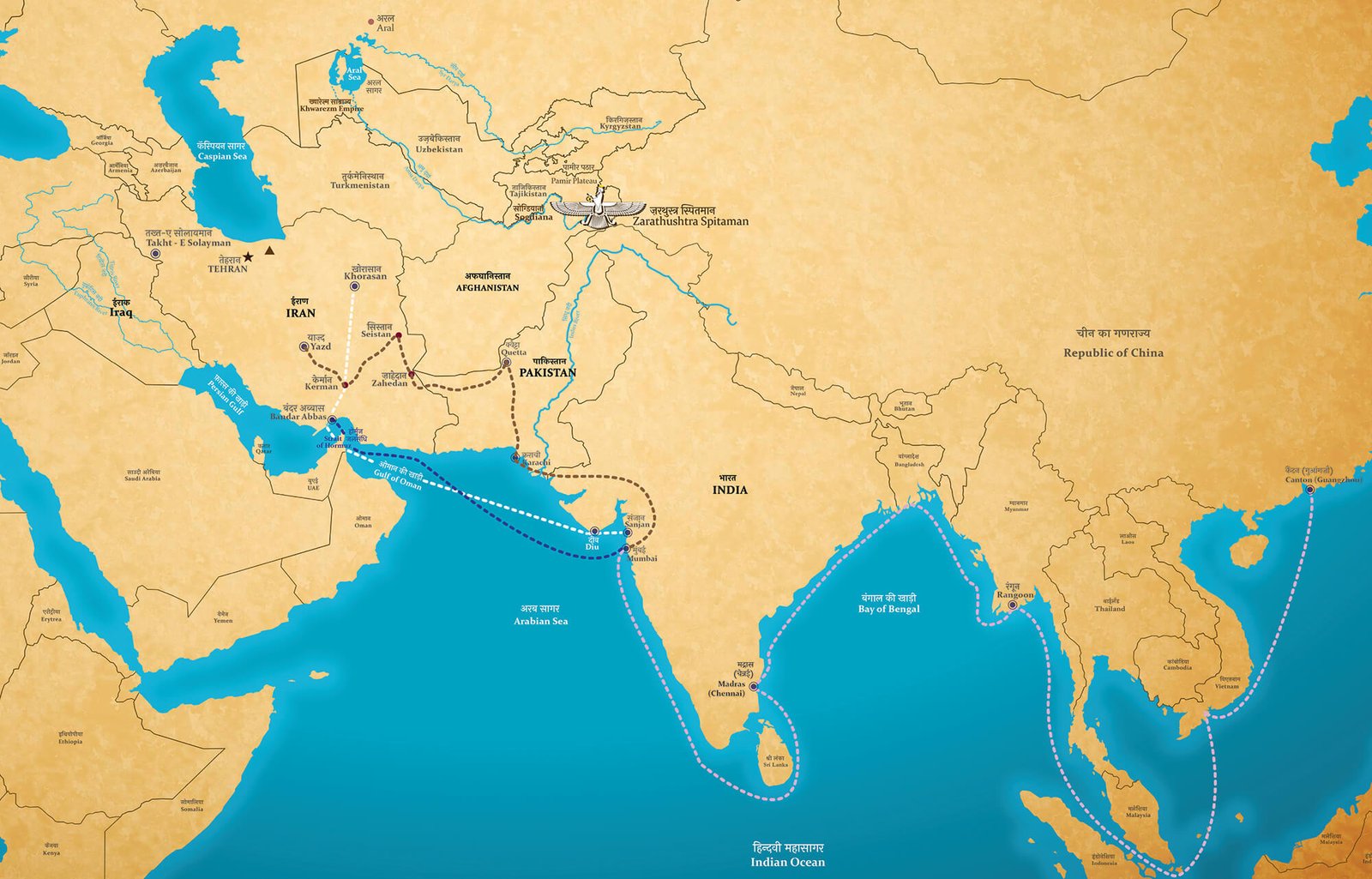
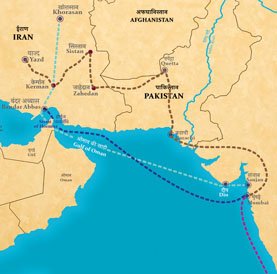
Parsi Migration Route The Journey From Iran To India – Saving The Religion
After the Arab invasion of Iran, two main groups of Iranian Zoroastrians migrated to India to save the religion and escape the twin ills of religious persecution and economic hardship. The first group of migrants came from the North-Eastern province of Khorasan, (8th – 10th Centuries) and settled in Sanjan on the West coast of India. The second group arrived in the 19th century, mainly from the provinces of Yazd and Kerman settling in Bombay and Karachi and were known as the Irani Zoroastrians.
Cities of Importance: In context with Zoroastrian Migration.
Bombay
In the mid-sixteenth century, Bombay was a fragmented, inhospitable archipelago of seven small independent islands……. See More
Karachi
During the 17th and early 18th centuries, Karachi was a prominent deep-harbour port used to export opium brought from the northern provinces to China……. See More
Sanjan
The old settlement of Sanjan Bandar (port) situated on the banks of the Varoli River on the West coast of India is the place where the Parsi story in India begins……. See More
Navsari
For nearly eight centuries, the city of Navsari played a significant role in the religious fabric of the community. It is in this city that the practice of Zoroastrianism evolved in India……. See More
Udvada
Welcome to Udvada, the sacred spiritual capital of the Zoroastrian faith in India. Nestled quietly along the coast of Gujarat, this historic village is the timeless guardian of the Iranshah Atash Behram—the oldest continuously burning, sacred fire of the Parsi Irani Zoroastrians in India……. See More
Mountain Shrines
The Pirs – Mountain Shrines of Hope & Remembrance
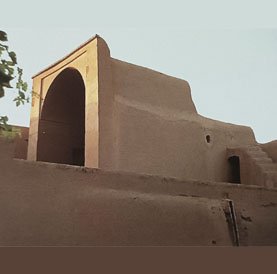
In the deserts surrounding the province of Yazd in Iran soaring Cypress trees are a tell-tale sign of the presence of Zoroastrian shrines. The six great Zoroastrian Mountain shrines many hidden deep in the heart of the mountains surrounding Yazd are dedicated to the family members of the last Sasanian King, Yazdegird Shahriyar III. These much-loved mountain shrines are a place of pilgrimage and hope for the Zoroastrians and a permanent remembrance of the family members of the last Zoroastrian Sasanian King Yazdegird III. In a way the shrines keep alive the memory of this young king as well as of the Sasanian Empire.
According to legend, the Arab forces, pursuing the family of Yazdegird III, chased them into the mountains surrounding Yazd. In despair they prayed to the mountains for protection; tradition states that in answer to their fervent pleas for help the mountains miraculously opened and the royal family vanished into the sacred rock forever, saved from being captured by the Arabs armies.
In the desert mountains of Iran’s Yazd province, towering cypress trees some said to be more than 2000 years old, signal the presence of sacred Zoroastrian shrines. Nestled high on rocky cliffs, the six great mountain shrines (Pirs) are dedicated to the wife and children of Yazdegird III.
Pir-e Nareke
Pir-e Nareke Isolated and sheltered against the stark, desert mountain ridges of Mehriz in the Yazd province, Pir-e Nareke stands as a sanctuary born from the collapse, of the Sasanian Empire, and represents s other Zoroastrian shrines do, the religious resilience of its people, and the profound grief they suffered and internalised….. See More
Pir-e Sabz
Pir e Sabz, also called Chak Chak, is the green shrine dedicated to the daughter of Yazdegird III who in an attempt to escape the Arab raiders bent on capturing her, appealed to the mountains to take her in and save her……. See More
Pir-e Seti Pir
Located close to the village of Moriabad East of Yazd, this shrine honours King Yazdegird’s Queen. The shrine was built by a Zoroastrian who visited the city of Mashad to pray at the Shrine of King Shavir……. See More
Pir-e Narestan
Located in the Kharuna mountains 40 miles northeast of Yazd in the eastern mountains, the Narestan shrine honours Prince Ardeshir the son of King Yazdegird III……. See More
Pir-e Banu Pars
Dedicated to the youngest daughter of King Yazdegird III, and named after her, Banu Pars is the farthest of the shrines built near the village of Zarju, 115 miles from Yazd……. See More
Pir-e Hrisht
Dedicated to the youngest daughter of King Yazdegird III, and named after her, Banu Pars is the farthest of the shrines built near the village of Zarju, 115 miles from Yazd……. See More
Of Hope Resilience and Preserving Memory
By gathering at these remote mountain sites for pilgrimage, the Zoroastrian community in Iran have preserved their historical memory, faith, and traditions against great odds. For the Zoroastrians these sanctuaries are monuments, of perpetual remembrance, of the heartbreaking story of Yazdegird III the last Zoroastrian king, who was crowned while still in his mother’s womb, he ascended the throne at eight years of age and died when he was twenty seven year old forever bravely fighting a war he knew he could not win. King Yazdegird III’s tragic death and the last days of the Sasanian empire are deeply etched in the collective memory of the Zoroastrian people.
For pilgrims, these shrines are spaces of healing, hope and renewal. Zoroastrians travel to these secluded mountain sanctuaries to pray for health, happiness, for fulfilment of their wishes and for the strength to perpetuate their traditions and faith and forever remember a young king who died for their kingdom and the great and glorious land of Iran.
Cyrus Cylinder
Cyrus Cylinder: The First Charter of Human Rights
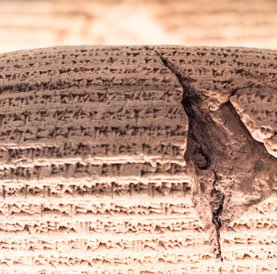
The famous clay cylinder of Cyrus the Great (r. 550-530 BCE) was discovered by the Assyrian-Iraqi archaeologist Hormuzd Rassam and his team, in 1879. It was buried as a foundation deposit in the city of Babylon in 539 BCE,
It is among the most celebrated discoveries of the ancient world. It records in cuneiform script the capture of Babylon and marks his liberality towards people of other faiths. The cylinder records his act of restoring the temples of the Babylonians and the king returning the statues of their gods. It records his subject’s right to worship their gods, to own property and to lead a life free from fear, under his rule.
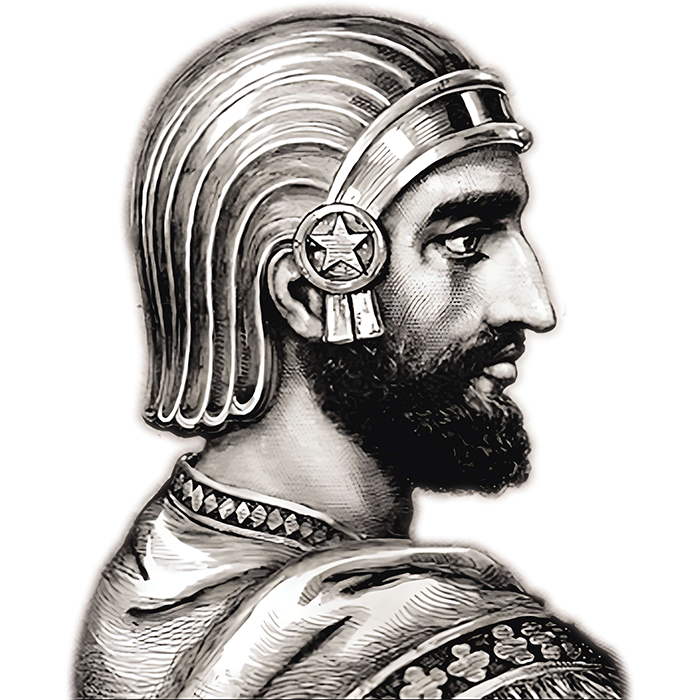
The Achaemenian King Cyrus the Great entered recorded history in 550 BCE, when he conquered Media. He rose to prominence with the conquest of Babylon. He released the Jews from Babylonian captivity and gave them money to rebuild the second temple of Solomon in Jerusalem. Under him the Achaemenian Empire extended from Asia Minor in the West to the Indus River in the East.
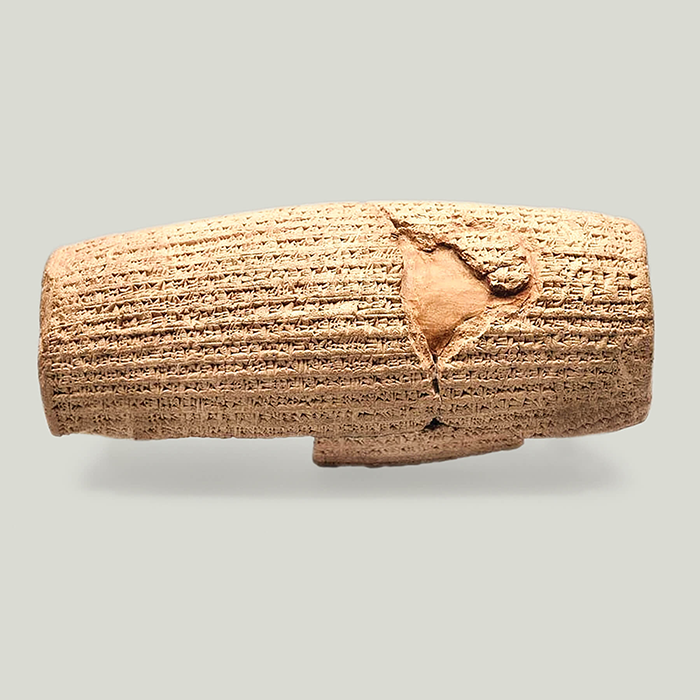
The famous clay cylinder of Cyrus the Great in Cuneiform script says: “I am Cyrus King of the Universe, the Great Ling, the Powerful King, King of Babylon, King of Sumer and Akkad, King of the four quarters of the world.” Inscribed with 45 lines in Babylonian cuneiform script it is celebrate for the message it delivers even today and has acquired an iconic status.
It is seen as the prototype of the Bill of Human Rights that gave citizens their basic rights which until then was dependent on the arbitrary whims of the ruler. By embedding the cylinder in the foundation of the royal building, Cyrus sought to legitimize his rule over Babylon. King Cyrus the Great recognized the human spirit and the individual’s right to exist unhampered by state intrusion.
The Strait of Hormuz
The Strait Of Hormuz – Whats In A Name
Ahura Mazda /Ohrmazd /Hormuz –the Lord of Wisdom
Until the Strait of Hormuz gained recent notoriety and sparked discussions about its etymological and historical origins, the Parsi Zoroastrians worldwide always had immediate recognition and ownership of the strait. After all, it was named after their Supreme God Ahura Mazda who is the ‘Lord of Wisdom’. The name, originating from its Avestan form, transforms into Ohrmazd in Pahlavi and ultimately becomes Hormuz in Persian.
The Name the Place and its History
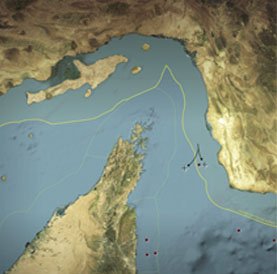
The Strait of Hormuz is the infamous 24-mile waterway connecting the Persian Gulf with the Gulf of Oman. The Strait of Hormuz, was the ‘jewel in the golden ring’ of the world’s most critical trade route and is a region of immense historical and geographical significance.
The Strait and its surrounding region evolved from an ancient salt and spice route into a heavily fortified, Portuguese controlled trading hub. Later the British regulated the area to facilitate their own spice trade. Today it has become a critical energy corridor under the sovereignty of the Iranian Government.
The Greek historian Arrian of Nicomedia, in his account of his expedition with Nearchus, Alexander’s Greek naval commander, docked at a place called Harmozia. The toponym Hormozon/Harmozia was given to the red and yellow-hued outcrop at the mouth of the Persian Gulf, suggesting that the settlement must have existed in the late Achaemenid period. Goods from Mesopotamia and the Indus Valley traversed through these straits. Classical astronomers and geographers, such as Ptolemy, referred to it as ‘Mare Persicum’ (Persian Sea) or ‘Sinus Persicus’ (Persian Gulf), while the coastal settlements were known as Ormus (Hormuz). In the imperial period the strait was known as Tang-i Hormoz situated in the province of Hormozagan Iran. These early references indicate that it was a familiar Iranian port of call in the ancient maritime trading system.
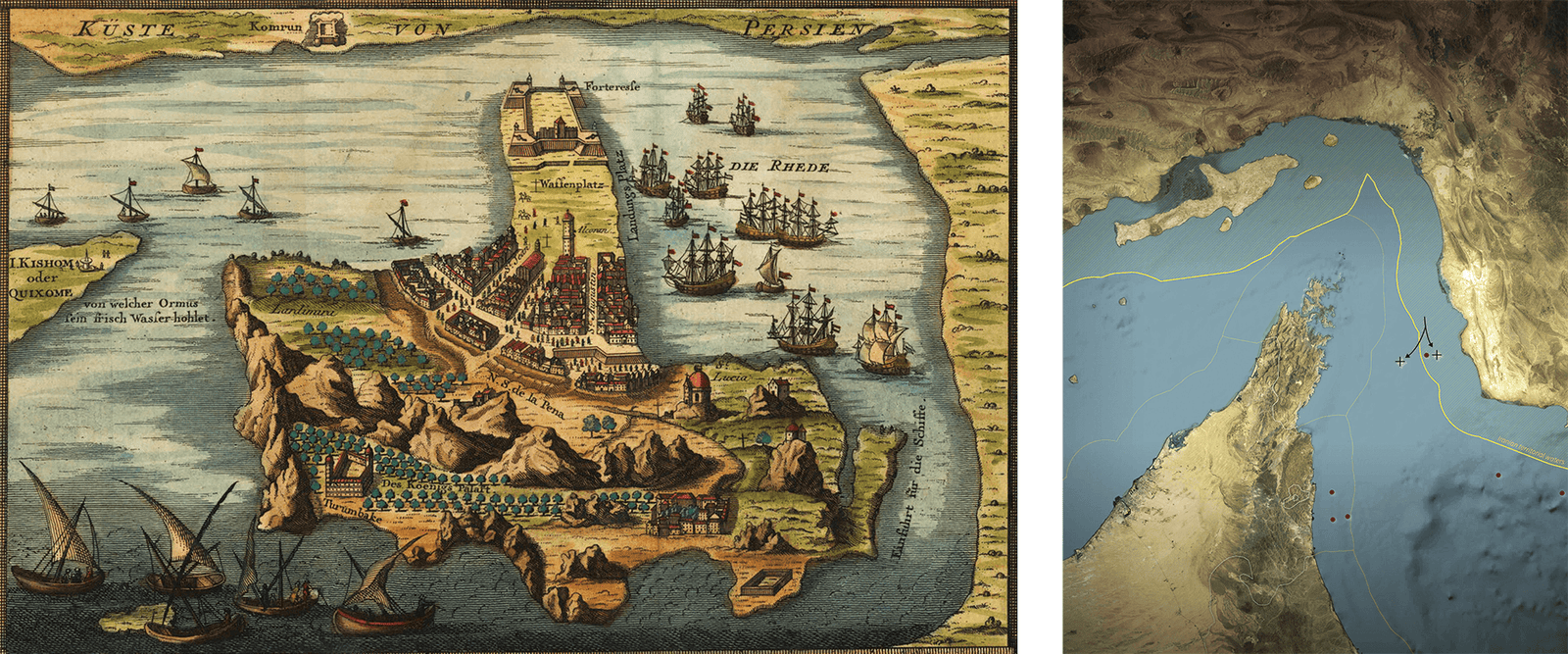
The Port of Hormuz from where the Zoroastrians left Iran and sailed to India in the 8th/10th centuries, landing on the Island of Diu where they stayed for 19 years. The image on the left is an archival lithograph, while the one on the right is a satellite image of the strait.
The Imperial Sasanian Trade
In the early 1900, Aurel Stein the indomitable ethnographer and archaeologist documented evidence of Sasanian occupation of the Straits of Hormuz. The Sasanians dominated the Gulf and Strait of Hormuz and controlled the lucrative Indian Ocean trade. The Gulf of Hormuz served as a vital imperial lifeline and ensured safe passage for their sea-faring traders. The Sasanians established forts and settlements across the province of Hormozagan and the Arabian Peninsula. The traders transported a wide array of goods, including ivory, inlaid Indian cabinets, frankincense, porcelain from China, wines, perfume, textiles from Iran, and a variety of precious metals, pearls, gemstones, dates, indigo, and salt. This trade network connected Iran, to Mesopotamia, and the ports in India, the Red Sea, and the Indian Ocean. Even in ancient times, control of these straits meant domination over the medieval world’s most lucrative and coveted trade routes. Throughout this period, Zoroastrianism was a powerful faith and its kings ruled over a large part of the then-known world. It is not surprising that this region of modern Iran still bears the name of Ahura Mazda the Supreme God of the Zoroastrians.
According to the Qisse-e Sanjan, the Zoroastrian Iranians fleeing persecution settled and lived on the Island of Hormuz for fifteen years before they set sail for India.